Inspections
What are the pool and spa barrier requirements in Victoria and how do you check yours?
In short
In Victoria, pools and spas are subject to registration and to periodic inspection and certification of the safety barrier, and the detail can depend on when the pool was built. An independent barrier check describes the condition of the fence, gates and surrounds so you know what to fix before the statutory inspection. Your council confirms what applies.
- Published
- Reviewed by
- VicWide
- Reading time
- 12 min read
- Topic
- Pools and fences
A pool or spa is a pleasure to own and a serious responsibility. In Victoria, pools and spas are subject to registration with your council and to periodic inspection and certification of the safety barrier, and the detail of what applies can depend on when the pool or spa was built. Many owners only find out what is expected when a council letter arrives, or when a buyer's conveyancer asks for the certificate.
This guide is the starting point for our pool and fence cluster. It explains the shape of the requirements in plain language, what a barrier is meant to do, what an independent pool and fence/barrier inspection looks at, how the statutory process differs from an independent check, and how to prepare for both. Where a topic deserves its own guide, we point to it.
What do the Victorian requirements look like?
The requirements have two parts that are easy to confuse.
The first is registration. Pools and spas in Victoria are subject to registration with the local council. Registering tells the council that a pool or spa exists at the property and lets it record when the pool or spa was built, which can affect which barrier requirements apply to it.
The second is inspection and certification of the barrier. On a periodic cycle, the barrier is inspected through a statutory process and, where it meets the requirements, a certificate is issued and lodged with the council. If the barrier does not meet the requirements, the owner is told what has to change before a certificate can be issued.
Both parts sit with the owner. They apply to in-ground and above-ground pools and to spas, and can apply to relocatable and inflatable pools as well, depending on their size and depth. Your council is the authority that confirms what applies to your property, the deadlines, and the process to follow. We help you understand it and prepare.
What is a pool barrier meant to do?
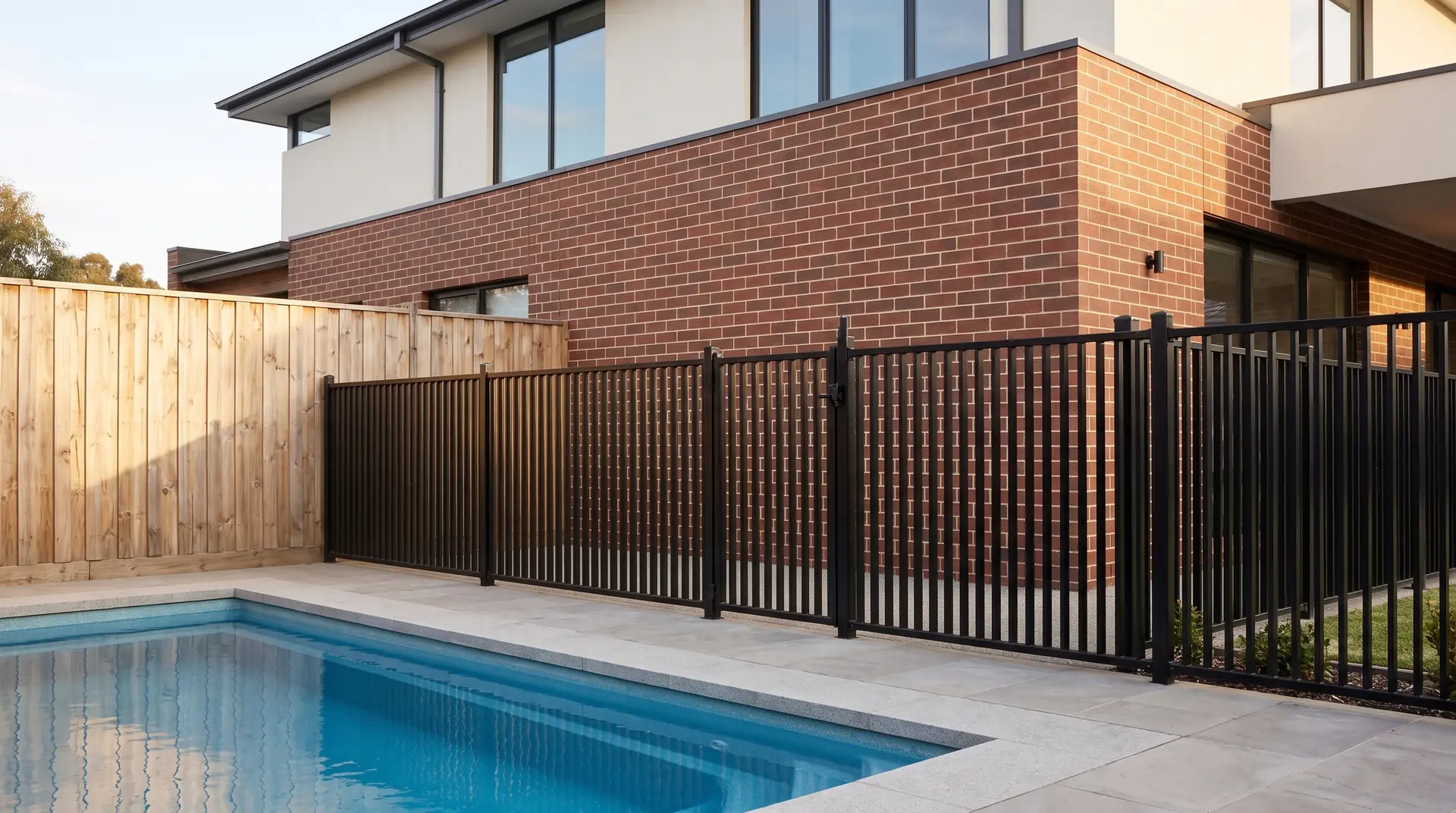
A barrier exists to slow down a young child who is heading for the water without an adult. Everything in the requirements follows from that purpose, which is why the detail covers more than the fence itself:
- Height and gaps. The barrier has to be high enough from the outside and without gaps a child could crawl under or squeeze through, including under panels, between panels and around posts.
- Climbability. Nothing near the outside of the barrier should give a child a foothold: pool pumps, planters, retaining walls, trees, furniture, air conditioning units and horizontal rails are the usual culprits.
- Gates. Gates should open away from the pool and close and latch on their own from any position. A gate that has to be pulled shut is not doing its job.
- Walls, doors and windows. Where the house or another building forms part of the barrier, the doors and windows in it have their own requirements.
- The whole perimeter. A barrier is only as good as its weakest point, so a short section behind a shed matters as much as the stretch beside the paving.
Which version of these requirements applies to your pool can depend on its date of construction, which the council takes from the register. An older barrier is generally assessed against the requirements of its time, not the newest ones. Your council confirms which set applies.
What does an independent barrier check look at?
An independent check is a visual inspection of the barrier as it stands on the day. We look at the panels, posts and fixings; gaps at the base and between elements; barrier height from the outside and anything that reduces it, such as built-up garden beds or decking; gates, hinges and latches and whether each gate self-closes and self-latches; walls, windows and doors that form part of the barrier; and objects near the barrier that could make it easier to climb.
You receive a written summary of what was observed, with photos, a plain explanation of the items you may want to address, guidance on the registration and certification requirements that may apply, and clear next steps. The visit itself, what to have ready and how to read the summary are covered in our guide to what a pool barrier inspection involves, which follows this pillar in the cluster.
The check describes the barrier at the time of the inspection. Barriers and gates change with wear and use. The check is not a certificate and it does not decide whether the barrier meets the requirements.
How is the independent check different from the statutory inspection?
The statutory inspection is part of the council's process. It is carried out by a person authorised for that purpose, it assesses the barrier against the requirements that apply to the pool, and where the barrier meets them it leads to a certificate that is lodged with the council. The certificate is the document your conveyancer, a buyer or the council may ask for.
An independent inspection is one you commission for your own information. It tells you about the barrier's condition and what may need attention, so you can decide what to do next and fix items on your own timetable rather than under a deadline. It is separate from the statutory process and it does not replace any part of it.
The two work well together. Owners commonly arrange an independent check first, fix what it finds, and then go through the statutory inspection with fewer surprises. If a statutory inspection or certificate is required, tell us when you enquire and we will let you know whether we can help, or who can carry it out or issue it, and what is involved.
Do you need to register, and what does the council want?
If the pool or spa is not on the council's register, registering is the first step. The council will usually want the property details, a description of the pool or spa, and the date it was built or as close as you can get to it. Installation documents, a building permit for the pool, an occupancy permit or final certificate, and any earlier barrier certificates all help to establish that date. If you are not sure what you have, our property paperwork service can help you work out what exists and who might hold the rest, which is often the council or the building surveyor who issued the permit.
Once registered, the council can tell you when the barrier certificate is due and how the cycle runs. Registration itself, and what to do when you have inherited an unregistered pool with a purchase, are covered in the cluster guide on registering a pool or spa with council.
A new pool or spa also raises the question of permits before any digging starts. A building permit from a building surveyor is usually involved, and a planning permit from the council may be as well, depending on the property. Our pillar on which permits you need for building work in Victoria explains how the two permits differ, and our permit help service helps you understand what applies and prepare the application material. Decisions sit with the council and the building surveyor.
What commonly fails, and how do you check your own barrier?
The same handful of problems appears in homes of every age. Walking the barrier yourself from time to time catches many of them:
- Open each gate from the inside and the outside and let it go from a few positions, including barely open. It should close and latch on its own every time.
- Look for anything propping a gate: a brick, a hose, a bin.
- Walk the outside of the barrier and look for footholds within reach of it: pots, pumps, furniture, retaining walls, low branches, a neighbouring fence.
- Check the base of the fence for gaps where soil has washed away or a panel has shifted.
- Check for new garden beds, mulch, paving or decking that have built up against the outside and reduced the barrier's height.
- Look at any house door or window that opens into the pool area and ask whether it was ever treated as part of the barrier.
- Note any new structure near the barrier, such as a pergola, a shed or a deck.
A self-check is useful, but it is no substitute for an inspection. The requirements for older pools, for walls that form part of the barrier and for window restrictors are not obvious. If anything on the list fails, keep the pool area out of reach of young children and supervise closely until it is fixed.
When do people ask for a barrier check, and how do you prepare?
The timing is usually set by a life event rather than by the calendar:
- A council letter arrives. The certificate is due, and the owner would rather find problems privately than at the statutory inspection.
- Selling. Buyers and their conveyancers often ask for the registration and the latest certificate, and an unresolved barrier issue can slow a sale. The guide on getting a barrier check before selling covers this.
- Buying. A buyer inherits the barrier, the register entry and any outstanding items at settlement. We suggest adding a barrier check to the other checks in our pillar on inspections before buying a home in Victoria, and often to the buyer's inspection of the house itself.
- Renting out. A rental provider (often called a landlord) is generally responsible for the barrier, and a check with a dated record is a sensible part of setting up a tenancy.
- After work in the yard. New decking, landscaping, a pergola or a replaced fence can change the barrier without anyone noticing.
- Apartments. In an apartment building the pool is usually common property, so the owners corporation usually handles registration and certification. Ask the manager for the current certificate.
Suburbs shape the question too. Pools are common in bayside suburbs such as Brighton and Frankston, some Camberwell gardens have older in-ground pools, and in the growth estates around Werribee pools and spas are going in behind new homes, so the barrier is often part of a wider landscaping job. We serve Melbourne and surrounds from our office in Werribee; check the service areas page or send an enquiry with the address and we will confirm what can be arranged.
Preparation is simple. Make sure every gate to the pool or spa area, and any side gates, can be reached and opened. Tell us whether the pool or spa is registered, if you know. Have any previous barrier certificates, council letters and installation documents ready, secure pets, and tell us about any access or safety concerns. Tell us the address, roughly when the pool or spa was built, and any date you are working to, such as a council deadline, a listing date or a settlement. We confirm the scope and provide a quote before anything is arranged.
What about fences that are not pool barriers?
The same service covers fences more generally. A fence inspection describes a fence's visible condition: leaning sections, damaged palings, loose posts or rails, rot or rust at the base, and gates that do not close properly. It is useful before a sale, after a storm, when a neighbour proposes to share the cost of a replacement, or when a boundary fence is doing double duty as part of a pool barrier. For boundary fence questions, have a title plan or survey plan available if you hold one.
What a fence inspection cannot do is tell you where the legal boundary is. That is the role of a licensed land surveyor. Disagreements with a neighbour about a shared fence, or about who pays for what, may need legal advice, and your council can explain any local requirements that apply to fence height or style.
This guide is a plain-language overview, not a statement of the rules, and it is not legal advice. The requirements change from time to time and depend on your pool's date of construction, so confirm the current position with your council before you rely on anything here. For what has to be disclosed in a sale, speak with your conveyancer or lawyer. Common questions about choosing a service are answered in the FAQs.
If a pool gate does not close and latch on its own, or the barrier is damaged, keep the pool area out of reach of young children and supervise closely until it is fixed. Then tell us about your property and we will help with the next step: call or WhatsApp 0406 194 163, or send an enquiry and we will come back to you.
Sources and authorities
These public sources set out the requirements this guide refers to. They are the places to confirm what applies to your pool or spa; we help you understand and prepare for them.
- Building and Plumbing Commission: registering a pool or spa with your council.
- Building and Plumbing Commission: pool and spa barrier inspections and lodging a certificate of barrier compliance with your council.
- Consumer Affairs Victoria: conveyancing, the vendor's statement and the contract of sale for sellers.
- Your local council: registration, barrier inspection cycles and certificates for the pool or spa at your property.
All guides in this topic
Every published guide in pools and fences guides, newest first.
- What should Brighton pool owners know about barrier inspections and council registration?
- Should I get a pool barrier check before buying a home with a pool?
- Should I get a pool barrier check before selling?
- Do I need to register my pool or spa with council?
- What is a pool barrier inspection and what does it involve?