Building & renovating
New construction & handover inspections
An independent pre-handover, or pre-completion (PCI), inspection of a new home in Melbourne, so you can raise unfinished or defective items with your builder. It is a visual check, explained in plain language in a report you can share.
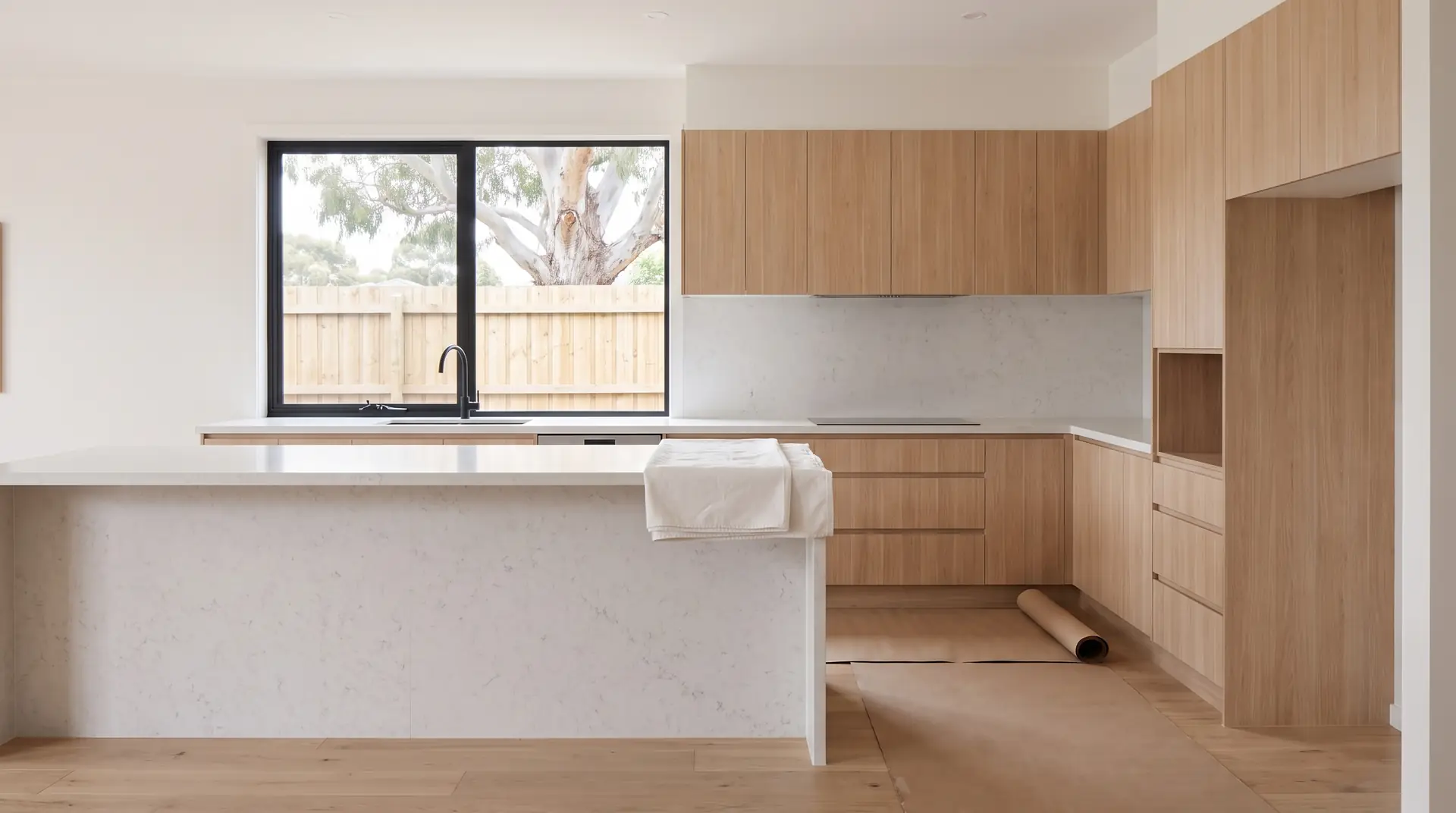
Illustration. Not an actual property or real inspection work.
Who is it for?
- People taking handover of a new home from a builder, including knock-down rebuilds.
- Buyers of a newly built townhouse, unit or apartment who want a check of their home before settlement, where access can be arranged with the vendor or builder.
- Owners who had stage inspections during the build and want an independent look at the finished home.
- Investors taking handover of a new property they can't easily visit.
What does it cover?
- The accessible interior and exterior of the finished home, as it is presented for handover.
- The visible quality and finish of walls, ceilings, floors, doors, windows, joinery, tiling and paintwork.
- Items that look unfinished, damaged or defective, noted so you can raise them with your builder.
- The roof space and subfloor, where they exist and there is safe and reasonable access.
- Driveways, paths, fencing and other external works close to the home, where they are part of the build and agreed in the scope.
What do you receive?
- A written report describing what was observed at the time of the inspection, organised area by area.
- Photos supporting key observations, to help you find each item on site.
- A list of items you may want to raise with your builder, in a form you can share.
- A clear note of areas that couldn't be inspected, and why.
- A plain-language explanation from VicWide, with the chance to ask questions.
How do you prepare?
Tell us your expected handover date as early as you can, and let us know if it moves.
Check your building contract for how completion and handover work, and arrange access with your builder before the inspection.
Have your plans, specifications and any agreed variations ready to share.
Ask your builder for the home to be clean and safe to walk through, with power and water connected where possible.
Tell us about anything you've already noticed, and share any earlier stage inspection reports.
Good to know
Where do we offer new construction & handover inspections?
We offer new construction & handover inspections across Melbourne. The suburbs below each have their own page. Other suburbs and surrounds are confirmed per enquiry.
- Melbourne CBD
- Box Hill
- Ringwood
- Camberwell
- Preston
- Whittlesea
- Coburg
- Brunswick
- Sunshine
- Werribee
- Williamstown
- Footscray
- Brighton
- Frankston
Questions about new construction & handover inspections
Can’t see your question? Send an enquiry and we’ll come back to you.
More detail
More about new construction & handover inspections
How it works
Tell us the address, who your builder is and your expected handover date. We'll confirm the scope and provide a quote. As handover approaches, you arrange access with your builder. On the day, we inspect the accessible areas of the finished home visually and take photos to support key observations. You then receive a written report, and we can talk you through it so you know which items to raise with your builder.
If you'd also like independent inspections at earlier stages of the build, see New-building inspections.
When to book a pre-handover inspection
Book it close to handover, once the home is finished enough to inspect and before you make the final payment. That leaves time to raise items with your builder before you accept the home.
Your building contract usually sets out how completion, the final payment and handover work, so check it for the timing, or ask a lawyer if you're unsure. Tell us your expected handover date when you enquire, and let us know if it moves.
Handover and the permit process
Building contracts use different words for the end of a build, such as completion or practical completion, and they usually set out what happens at handover. Check how your contract describes it.
The permit process has its own steps. The mandatory inspections for the building permit, including the final inspection, are carried out by, or on behalf of, the relevant building surveyor. A handover inspection sits outside that process. You commission it for your own information. It doesn't replace any mandatory inspection, it isn't a sign-off, and it doesn't change your builder's responsibilities.
Raising items with your builder
Start with the scope and the areas that couldn't be inspected. Then go through the items area by area and share the report with your builder. Keep a copy with your contract and other build records. If you're unsure what an item means, ask us to explain it in plain language.
Some items only show up after you've lived in a home for a while. Your contract may say how and when to report items after handover, so check it or ask a lawyer. If a disagreement with your builder becomes a dispute, get independent legal advice. Our expert witness inspections page explains independent reports for building disputes.
What this inspection is not
It isn't the building surveyor's final inspection, an occupancy permit, a certificate of compliance or a structural engineering assessment, and it doesn't test electrical, plumbing or gas systems. It can't see work that has already been covered up, such as framing inside finished walls. Where an observation needs a closer look, the report can recommend the type of professional to speak with.
Sources and authorities
These public sources set out the requirements this page refers to. They are the places to confirm what applies to your property; we help you understand and prepare for them.
- Building and Plumbing Commission: Victoria's building regulator, with guidance on building permits, owner-builders and mandatory inspections.
- Building and Plumbing Commission dispute resolution: the free resolution service for domestic building disputes in Victoria.
Learn with VicWide
Understand more before you decide.
Showing 3 topics
Inspections
What should I do before the inspection?
Good access makes for a more complete inspection. This topic covers arranging keys and permission, clearing the way to key areas, and gathering documents that help explain the property.
Key points 5
- Confirm access with the owner, agent or renter, and arrange keys ahead of the day.
- Make sure the roof space access, subfloor access, meter box and outbuildings can be reached.
- Secure pets and mention anything that could affect safe access.
- Have plans, permits, certificates or previous reports ready to share.
- Areas that can't be reached safely are recorded as limitations in the report.
Related service: Building & pest inspections
Inspections
How do I read an inspection report?
An inspection report records what was observed at the time of the inspection, where it was observed, and what couldn't be inspected. This topic walks through a typical report structure and how to use it when you talk with builders, agents or other advisers.
Key points 5
- A report describes observations at the time of the inspection. Conditions can change afterwards.
- Read the scope and limitations first, so you know what was and wasn't inspected.
- Observations are grouped by area, so you can find what matters to your decision.
- A report is not a certificate of compliance, a warranty or an insurance policy.
- If something isn't clear, ask us to explain it in plain language.
Related service: Compliance & reporting
Building
What should I ask while my new home is being built?
Building a new home involves several construction stages, a building permit, and a builder who remains responsible for the work. This topic explains how independent stage inspections sit alongside the mandatory inspections for the building permit, and which questions are worth asking along the way.
Key points 5
- Mandatory inspections for the building permit are carried out by, or on behalf of, the relevant building surveyor.
- Independent stage inspections are ones you choose to commission. They don't replace the mandatory inspections.
- Commonly requested stages include slab or base, frame, lock-up, fixing, and completion or handover.
- Check your building contract for how each stage is defined and how you'll be told a stage is reached.
- Your builder remains responsible for the building work, whatever inspections you commission.
Related service: New-building inspections
Ready when you are
Enquire about new construction & handover inspections
Tell us about the property. We confirm the scope and a quote with you before anything is arranged.
Reviewed by VicWide. Last updated .
Guides
Read before you decide.
Building & renovating
What should buyers of a new estate home in Werribee check at handover?
At handover of a new estate home in Werribee, check the finishes room by room, then what estates make important: drainage on reactive clay, downpipes connected to stormwater, fences and retaining walls, the driveway and crossover, and the builder's paperwork. An independent handover inspection lists what to raise with your builder and is separate from the building surveyor's final inspection.
- Published
- Reading time
- 7 min read
Building & renovating
Should I do a handover inspection before or after making the final payment?
Where your contract allows it, arrange the handover inspection before the final payment, once the home is finished enough to inspect and before you take possession. Unfinished or defective items then go to your builder while the contract's completion process is still open. Your contract sets the rules on completion and payment, so check it or ask a lawyer first.
- Published
- Reading time
- 6 min read
Building & renovating
What is a handover inspection and when should it happen?
A handover inspection is an independent, visual check of a finished new home before you take possession, so you can raise unfinished or defective items with your builder. It should happen once the home is finished enough to inspect and before handover and the final payment, as your contract describes them. It is separate from the building surveyor's mandatory final inspection.
- Published
- Reading time
- 7 min read