Inspections
Should I get a pool barrier check before buying a home with a pool?
In short
Yes, usually. A pool barrier check before you buy tells you the condition of the fence, gates and latches, what the registration and certification position appears to be, and what you may be taking on. It does not certify the barrier; the council's statutory process does that, and the owner's obligations generally pass to you at settlement.
- Published
- Reviewed by
- VicWide
- Reading time
- 7 min read
- Topic
- Pools and fences
A pool in the backyard is often the reason a family chooses one home over another, and the barrier around it is the part they look at least. In Victoria, pools and spas have registration and barrier inspection requirements that sit with your council, and those obligations generally pass to the new owner. Whatever state the barrier is in on settlement day is likely to be your responsibility once you own the home.
This guide answers whether a pool barrier check before buying is worth arranging, what it looks at, what to ask the vendor and the council, and what it cannot tell you. It is part of our series on pool and spa barrier requirements in Victoria.
Why does the pool barrier matter when you buy?
Three reasons, in order of importance.
Safety first. A barrier that does not work is a hazard to any young child who visits the home, from the day you move in. Gates that do not self close, gaps that have opened as the ground settled, and a pool pump placed where it gives a foothold are common, and none of them show up in a listing photo.
The obligations come with the property. Registration with the council, periodic inspection and certification of the barrier, and keeping the barrier in a condition that meets the current requirements generally become the new owner's responsibility. If the pool is not registered, or the certificate has lapsed, that is likely to be your problem after settlement rather than the vendor's; your conveyancer can tell you what to ask for before then.
The cost of putting it right is unknown until someone looks. A latch is cheap. Replacing a barrier built against a boundary fence that no longer does the job, or raising a fence that a new deck has made climbable, is not. A check before you commit turns an unknown into a known, so you can ask the vendor to deal with it, allow for it in your price, or walk away.
What does a pre-purchase pool barrier check look at?
A pool barrier check before buying is the same visual, non-invasive inspection we carry out for any owner, set up around your purchase dates. Our guide to what a pool barrier inspection involves walks through it in detail. In brief, it covers:
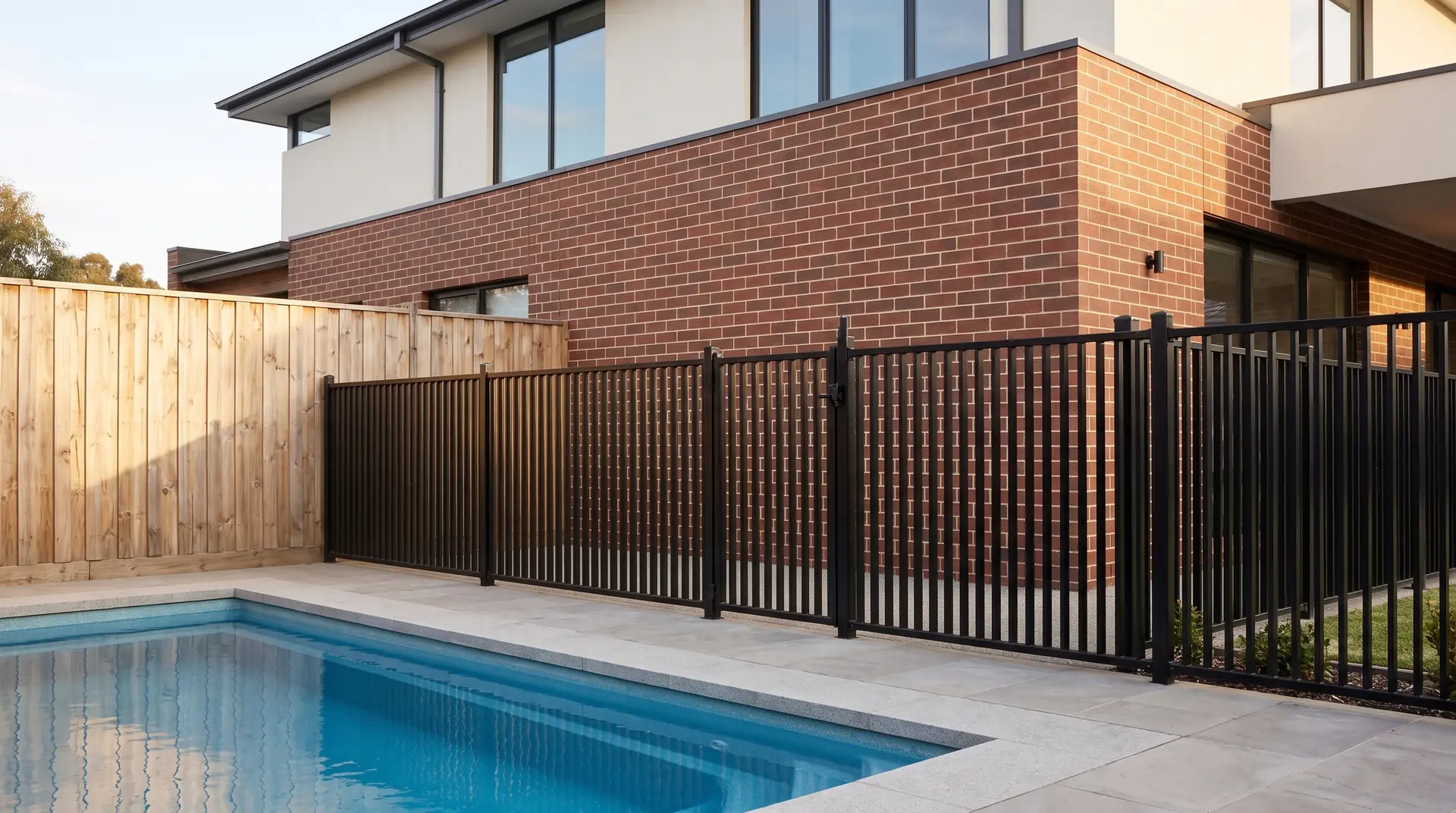
- The barrier: height, condition of panels, posts and fixings, and sections that lean or flex.
- Gaps: under the barrier, between its parts and around gates.
- Gates: whether each one opens away from the pool, self closes and self latches from any position, and whether the latch can be reached by a child.
- Walls, windows and doors that form part of the barrier, where the house itself encloses one side of the pool.
- Climbable objects on both sides: pumps, planters, furniture, retaining walls, trees and anything else within reach.
- Visible changes since the barrier was built: decks, landscaping, new garden beds and replaced fencing.
- The paperwork you and the vendor can produce: registration with the council, the most recent certificate, any council correspondence and the pool's installation records, where they exist.
You receive a written summary with photos, a plain explanation of the items you may want to raise with the vendor, and clear next steps. Where the registration and certification requirements may apply, the report explains what they are and points you to the council for the current position.
What should you ask the vendor and the council?
Ask the selling agent, in writing, for:
- Confirmation that the pool or spa is registered with the council, and a copy of the registration.
- The most recent barrier certificate, and the date of the last statutory inspection.
- Any council letters about the pool, including notices to rectify the barrier.
- When the pool or spa was installed, because the requirements a barrier is measured against can depend on that.
- Any permits for the pool, the barrier and later works around it, such as a deck or a pergola.
Ask your council, or have your conveyancer ask, whether the pool is registered and what the certification position is. Our guide to registering a pool or spa with the council explains how registration works and what the council holds.
Read the vendor's statement with your conveyancer or lawyer, and ask them what the vendor is required to disclose about the pool. We do not give legal advice on what the vendor must do; we tell you what the barrier looks like and what the paperwork shows.
How does it fit with the pre-purchase inspection?
Most buyers of a home with a pool arrange a building and pest check before buying of the home itself. That inspection looks at the building's accessible areas and signs of timber pest activity, and it notes the pool enclosure as a site element without the close, measured look the barrier needs.
A pool barrier check is a separate scope, and the two are often arranged for the same visit. Tell us the home has a pool or spa when you enquire, and we'll confirm both scopes and your key date. Our guide to inspections before buying a home in Victoria explains how the full set of checks fits together, and our pool and fence barrier inspection service sets out the scope for the barrier.
If you are buying an apartment or a unit, the pool is usually common property run by the owners corporation, which usually manages the barrier; ask your conveyancer how that works for the lot you are buying. A strata report, rather than a barrier check, is the place to start.
What can the check not tell you?
Being clear about the limits matters more here than for most inspections, because the word "compliant" gets used loosely in sales:
- It is not the statutory inspection and it does not issue a certificate. Victoria's certification process runs through the council and has its own inspections. If you need a certificate after settlement, tell us and we'll let you know whether we can help, or who can carry it out.
- It does not say the barrier is compliant. It describes what was observed on the day, points you to the requirements that may apply, and leaves the formal verdict to the statutory process.
- It cannot see what is hidden: a fence behind dense planting, a section only visible from the neighbour's side, or fixings concealed by cladding.
- It cannot tell you what the council will do about an unregistered pool or a lapsed certificate, or what it will cost to put a barrier right. A fencing contractor quotes that work.
- It does not assess the pool itself, the pump, the water, the electrics or the gas heater. Those are matters for the relevant trades.
The vendor's own paperwork has limits too. A certificate describes the barrier on the day it was issued, and barriers change with wear, landscaping and new furniture. Our sibling guide on getting a pool barrier check before selling explains the vendor's side of the same question.
What happens after settlement?
Once you own the home, the registration, inspection and certification obligations are generally yours. Confirm the position with the council early, note any deadline, and fix the items the check found before the pool is used. If young children live in or visit the home, treat a gate that does not latch as an urgent repair.
Keep the registration, the certificate, the check report and any repair invoices together. When you eventually sell, that file answers the same questions the next buyer will ask you.
Buying a home with a pool and want the barrier looked at before you commit? Call 0406 194 163 or send an enquiry with the address and your auction or contract date, and we'll come back to you with what can be arranged.
Sources and authorities
These public sources set out the requirements this guide refers to. They are the places to confirm what applies to the pool or spa; we help you understand and prepare for them.
- Building and Plumbing Commission: Victoria's building regulator, with consumer guidance on pool and spa barriers, registration and barrier inspections.
- Consumer Affairs Victoria: consumer guidance on buying a home in Victoria, including the vendor's statement and cooling off.
- Your local council: pool and spa registration, the certification process and any deadlines for the property.