Inspections
What should Brighton pool owners know about barrier inspections and council registration?
In short
In Brighton, pools and spas are registered with Bayside City Council, which also administers the periodic inspection and certification of the barrier. Many Brighton pools are older or come with a knockdown rebuild, and salt air wears gates and latches. An independent barrier inspection tells you the barrier's condition before the statutory process; the council confirms what applies and when.
- Published
- Reviewed by
- VicWide
- Reading time
- 7 min read
- Topic
- Pools and fences
Brighton is a bayside suburb of larger homes, and behind many of them is a pool or spa. That brings a layer of requirements that owners elsewhere may never meet: registering the pool with the council, having the barrier inspected and certified on the council's cycle, and keeping it in order through renovations, rebuilds and sales.
This guide is for Brighton owners. It explains how registration works through Bayside City Council, what tends to be different about pools here, and where an independent barrier inspection fits. Our guide on pool and spa barrier requirements in Victoria covers the statewide picture, and our Brighton area page covers the suburb more broadly.
How does pool registration work in Brighton?
In Victoria, pools and spas are subject to registration with the local council, and to periodic inspection and certification of the safety barrier. For a Brighton property, postcode 3186, that council is Bayside City Council. The council keeps the register of pools and spas, sets out the process and the dates that apply to each one, and receives the barrier certificate when the statutory inspection has been carried out.
What a barrier must meet can depend on when the pool or spa was installed, so the council's record of your pool, including its installation date, matters. Our guide on registering a pool or spa with council walks through registration itself.
Two points sit under everything else here. The statutory inspection and the certificate come from the council's process, and an independent inspection is separate from it. And the council confirms the requirements, deadlines and process for your property; we help you understand them and prepare.
What is different about Brighton pools?
Several things about Brighton change how the question plays out.
Many Brighton pools have been in the ground a long time, in established gardens, with barriers built to the requirements of their day and gardens that have grown around them since.
Mature planting against the fence, a pergola post beside it, a raised garden bed, a built in barbecue or outdoor furniture pushed against the barrier can all create a way to climb that was not there when the pool went in. Original gates carry original hinges and latches, and some older barriers rely on a boundary fence shared with a neighbour.
Mid century homes in Brighton are being renovated, often around the pool. New decking, an outdoor kitchen, a glass fence replacing a timber one, or a new door in a house wall that forms part of the barrier all change what the barrier is. A renovation is a common moment for a barrier to drift out of order, because everyone is looking at the new work rather than the fence.
Knockdown rebuilds are common in Brighton, and many include a new pool. A new pool and its barrier need a building permit from a building surveyor, and in some cases a planning permit from the council as well.
Some Brighton streets sit in heritage pockets, where a fence visible from the street, or a change to a front boundary fence that forms part of a barrier, can bring the council's planning process in; the council confirms which overlays apply to an address.
Then there is the bay. Salt air corrodes hinges, latches, screws and the fittings that hold glass panels. A gate that closed and latched on its own last summer may not this one. Timber palings and posts weather faster near the water, and sandy soils can let posts shift so that gaps open at the base. Barriers in Brighton change faster than the same barrier would inland.
If the home is rented out, the rental provider is usually the person responsible for keeping registration and certification in order, with the property manager arranging access.
What does an independent barrier inspection look at on a Brighton property?
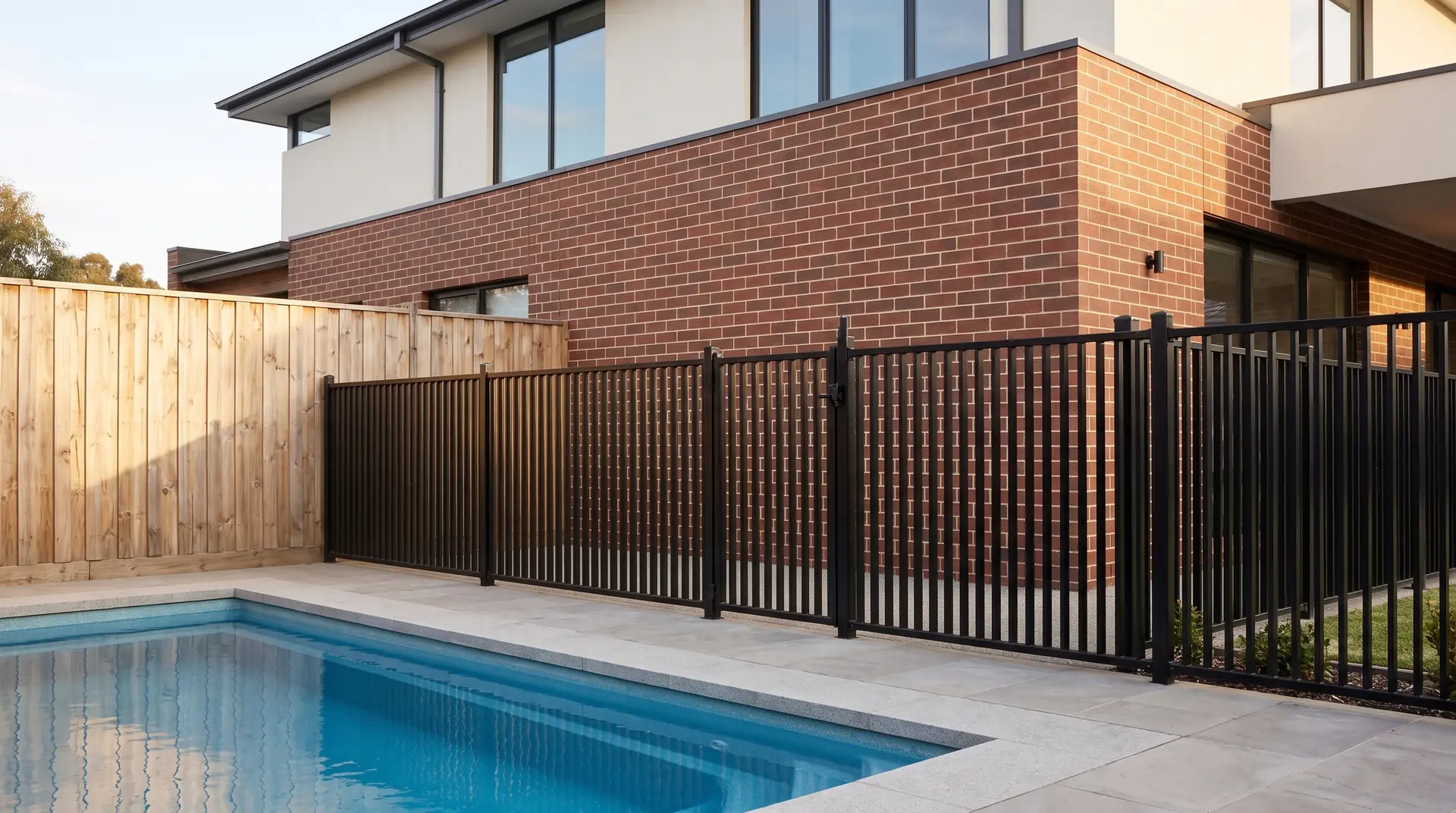
Our pool and fence barrier inspection looks at the barrier itself: panels, posts and fixings, gaps, height, and anything nearby that could make it easier to climb. It looks at the gates, including whether they self close and self latch, and at any walls, windows or doors of the house or an outbuilding that form part of the barrier.
On a Brighton property we pay particular attention to the things the bay and the garden do to a barrier: corrosion on hinges, latches and glass fittings, planting and furniture against the fence, pool pump enclosures and sheds that sit close to the barrier, and the base of posts in sandy ground.
You receive a written summary of what was observed at the time, with photos, a plain explanation of the items you may want to address, guidance on the registration and certification requirements that may apply, and clear next steps.
It is not the statutory inspection and it does not issue the certificate. If you need the certificate, tell us when you enquire and we will let you know whether we can help, or who can carry out that inspection and issue it.
If a gate does not close and latch on its own, or the barrier is damaged, keep the pool area out of reach of young children and supervise closely until it is fixed.
What should you do if you are building or rebuilding with a pool in Brighton?
A new pool is a project with its own permits. The building permit for the pool and the barrier comes from a building surveyor, whose process sets out when the barrier must be in place and what inspections are carried out for the permit. A planning permit may be needed depending on the property and any overlays, which is a question for Bayside City Council.
Our guide on permits for a swimming pool or spa explains the two permits, and our permits and approvals service helps you understand what each authority asks for and prepare it.
Once the pool is installed, it is registered with the council through the council's process, and the barrier enters the inspection and certification cycle. Keep the building permit, the installer's documents and every certificate together with the home's records; buyers will ask for them later.
An independent look at the barrier once fencing and landscaping are finished, while the fencer is still contactable, is often the easiest moment to fix a gate that does not quite latch or a gap under a panel.
What should you do if you are selling or buying a Brighton home with a pool?
Buyers in Brighton expect to ask about the pool. If you are selling, check with Bayside City Council what your obligations are before the sale, and gather the registration details and the most recent barrier certificate. An independent inspection before the statutory one lets you fix a sagging gate or a corroded latch on your own timetable. Our guide on a pool barrier check before selling sets out the sequence.
If you are buying, ask the agent for the pool's registration details and its barrier certificate, and read them with your conveyancer. A pre-purchase inspection notes the visible condition of the pool area, but the barrier is its own inspection with its own requirements, and an older Brighton pool may have requirements tied to its installation date. Arrange the barrier inspection before you commit, through the agent, in the same way as the pre-purchase inspection.
What happens next?
Tell us the address, whether the pool or spa is registered with Bayside City Council if you know, any letters or dates the council has given you, and any previous certificates or installation documents. Tell us how the pool area is enclosed, including whether a house wall or a boundary fence forms part of the barrier. We confirm the scope and provide a quote before anything is booked.
Not sure which inspection you need? Ask us. Call or WhatsApp 0406 194 163, or send an enquiry and we will come back to you.
Sources and authorities
These public sources set out the requirements this guide refers to. They are the places to confirm what applies to your property; we help you understand and prepare for them.
- Building and Plumbing Commission: Victoria's building regulator, with guidance on pool and spa barriers, registration and building permits.
- Consumer Affairs Victoria: consumer guidance on buying and selling a home in Victoria.
- Bayside City Council: pool and spa registration and barrier inspection requirements for Brighton properties.