Inspections
What is a pool barrier inspection and what does it involve?
In short
A pool barrier inspection is a visual check of the fence, gates, latches and any walls, windows or doors that form the barrier around a pool or spa, noting gaps, height, condition and climbable objects nearby. An independent inspection tells you the barrier's condition and your next steps; the statutory certificate comes through your council's process.
- Published
- Reviewed by
- VicWide
- Reading time
- 8 min read
- Topic
- Pools and fences
A pool or spa barrier is the fence, gates and other parts that keep young children away from the water when no one is watching. In Victoria, pools and spas have registration and barrier inspection requirements that sit with your council, and the barrier itself has to work every day of the year, not just on the day it was built.
A pool barrier inspection is a close look at that barrier. This guide explains what the inspection involves, how an independent inspection differs from the statutory certificate, what we look at, and what you receive. For the requirements themselves, start with our guide to pool and spa barrier requirements in Victoria.
What is a pool barrier inspection?
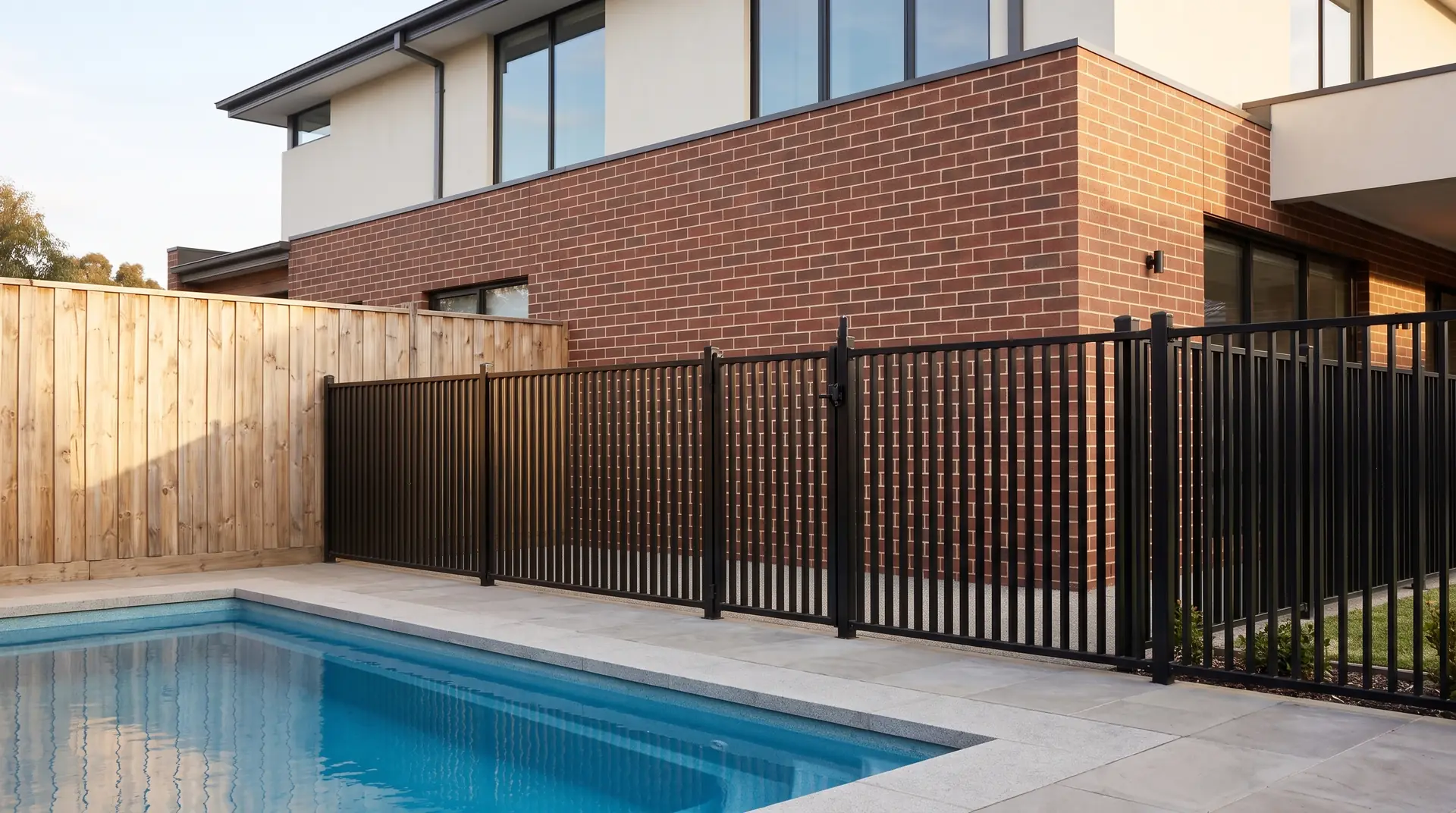
A pool barrier inspection is a visual, non-invasive check of everything that forms the barrier around a pool or spa. That usually means a fence with its panels, posts and fixings, one or more gates with hinges and latches, and sometimes a wall of the house, a window or a door that forms part of the enclosure. It also means the ground and the objects on both sides of the barrier, because a barrier that is easy to climb is not doing its job.
The inspection describes what was observed on the day: the height of the barrier, gaps under and between its parts, the condition of the materials, whether each gate closes and latches on its own, and anything nearby that a child could use to climb. It is not a test of the pool, the pump, the water or the electrics, and it does not look at the house itself. Our pool and fence barrier inspection service sets out the scope in full.
Independent inspection or statutory certificate: which one do you need?
This is the most important distinction in this guide. Victoria's registration and periodic certification of pool and spa barriers is a statutory process administered through your council, with its own inspections and its own certificate. What applies, including which requirements your barrier is measured against, can depend on when the pool or spa was installed, and your council confirms the current rules and deadlines for your property.
An independent barrier inspection is a different thing. You commission it for your own information: before you sell, before you buy, before a certification visit, after a storm, or simply because the gate has started to stick. It tells you the barrier's condition and what may need attention, so you can decide what to do next. It does not issue the statutory certificate, and it is not a compliance verdict on your barrier.
If you need the statutory certificate, say so when you enquire. We'll let you know whether we can help with that, or who can carry it out and issue it, and what is involved. We will never leave you thinking an independent report does something it does not.
What does the inspection look at?
Barrier requirements are detailed, and the inspection follows the barrier around the pool rather than sampling it. The items below are what most inspections cover:
- The barrier itself: its height from the ground on the outside, the condition of panels, posts, rails and fixings, and any section that leans, flexes or has come loose.
- Gaps: under the barrier, between vertical members, and around gates, including the gap at the bottom of a gate when it is closed.
- Gates: which way each gate opens, whether it closes by itself from any position and latches by itself, the height and position of the latch, and whether the latch can be reached through or over the gate.
- Walls, windows and doors that form part of the barrier, where relevant: how they open, how far, and whether any lock or restrictor is fitted and working.
- Climbable objects: pool pumps, planter boxes, outdoor furniture, retaining walls, trees, air conditioning units, bins and anything else within reach of the barrier that would give a child a foothold.
- Horizontal rails and footholds on the barrier itself, which can turn a fence into a ladder.
- Signs of wear: rusted hinges, a latch that no longer springs, timber that has rotted at the base of a post, glass panels with cracked edges or loose clamps.
Each of these is recorded with photos. Where something has clearly changed since the barrier was built, such as a deck built up against the fence or a new garden bed outside it, the report says so, because those changes are the usual reason a once adequate barrier stops being one.
What happens on the day?
We walk the barrier with you, if you are there, or alone if you have arranged access. Each gate is operated from different opening positions to see whether it closes and latches on its own. Heights and gaps are measured. The ground on both sides is checked for build up, erosion and objects. Where a door or window forms part of the barrier, it is opened and closed as a child would try it.
Nothing is dismantled, no fixings are removed and no adjustments are made during the inspection. If a gate fails to latch while we are there, we tell you straight away rather than waiting for the report, because that is a safety matter that should be dealt with that day.
The inspection can only describe what is visible and reachable. Fences hidden behind dense planting, or sections on a neighbour's side that cannot be seen, are listed as limitations.
What do you receive, and what next?
You receive a written summary of what was observed, with photos, and a plain explanation of the items you may want to address. Where the registration and certification requirements may apply to your pool or spa, the report explains what they are and points you to your council for the current process. It finishes with clear next steps.
Those next steps are usually practical: adjust or replace a latch, remove a climbable object, raise a section of fence, fit a restrictor to a window. A fencing contractor or a handyperson deals with most of them. Once the work is done, the statutory process, if you are in it, has its own inspection to confirm the barrier against the current requirements.
A barrier changes with use and weather. Gates settle, springs weaken, gardens grow and furniture moves. An inspection describes the barrier on the day; keeping it that way afterwards is part of owning a pool.
When is it worth arranging one?
The common reasons people ask for a pool barrier inspection are:
- Selling a home with a pool, so that barrier problems are found and fixed before a buyer's inspection or the council's process finds them.
- Buying a home with a pool, alongside a building and pest check before buying, so the barrier is understood before you commit. Our guide to inspections before buying a home in Victoria explains how the two fit together.
- Before a certification visit, so that avoidable problems are dealt with first.
- Renting the property out, where a rental provider wants a dated record of the barrier alongside a routine rental check.
- After a change: a new deck, landscaping, a storm, a replaced gate, or children arriving in the household.
- Building a new pool, where a building permit is commonly needed for the pool and its barrier. Our guide to which permits building work needs in Victoria covers where that sits.
If your gate does not close and latch on its own today, do not wait for an inspection. Keep the pool area out of reach, supervise closely, and get the gate fixed. Then let us look at the rest.
Not sure whether you need an independent inspection, the statutory certificate or both? Call 0406 194 163 or send an enquiry with the address and what prompted the question, and we'll come back to you.
Sources and authorities
These public sources set out the requirements this guide refers to. They are the places to confirm what applies to your pool or spa; we help you understand and prepare for them.
- Building and Plumbing Commission: pool and spa barrier inspections and lodging a certificate of barrier compliance with your council.
- Building and Plumbing Commission: registering a pool or spa with your council.
- Consumer Affairs Victoria: conveyancing, the vendor's statement and the contract of sale for sellers.
- Your local council: pool and spa registration, barrier inspection deadlines and the certification process for your property.