Inspections
Do I need a strata report and a building inspection for an apartment?
In short
For an apartment or unit in an owners corporation, a strata report usually covers both needs: it inspects the lot and the common property you can reach, and helps you read the owners corporation papers. A standalone building inspection suits a house on its own title. For a townhouse, tell us and we will confirm the right scope.
- Published
- Reviewed by
- VicWide
- Reading time
- 6 min read
What is the difference between a strata report and a building inspection?
Both are independent, visual inspections of the accessible parts of a property, carried out for your own information and written up with photos and a list of what could not be seen. The difference is the shape of the property they are built for.
A building inspection, which for a buyer usually means a building and pest check before buying, is designed for a house on its own title. The whole building and the grounds are yours to look at: the rooms, the roof space, the subfloor, the exterior, the fences and the outbuildings, with visible signs of timber pest activity included.
A strata and owners corporation report is designed for a lot in an owners corporation. An owners corporation (often still called a body corporate) manages the shared parts of a subdivided property, such as an apartment building or a group of units.
The report inspects the lot you are buying, the common property you can reach on the day, and helps you read the owners corporation papers for building related points. Our guide to what a strata report covers and leaves out goes through that scope in detail.
Do you need both for an apartment?
Usually not. For an apartment or unit, the strata report already includes the inspection of the lot itself: the rooms, the wet areas, the windows and doors, the balcony or courtyard, and the car space or storage that comes with it. Ordering a separate building inspection on top would largely repeat that work.
What the strata report adds is the part a plain building inspection cannot give you: the common property and the papers. In an apartment building, the roof, the façade, the lifts, the car park and the drainage are shared, and problems with them become shared costs. A look at the accessible common areas, read alongside the minutes and the maintenance plan, tells you about the building you are buying into, not only the rooms you will live in.
So the practical answer for most apartment buyers is one report, shaped for a lot, rather than two reports that overlap. The starting point for apartment and unit buyers generally is our guide to what to check before buying an apartment or unit in Victoria.
When is a building inspection the right choice instead?
The question flips when there is no owners corporation. A house, or a townhouse on its own title with no shared property, has no common areas and no owners corporation papers, so a strata report has nothing extra to add. A pre-purchase inspection, with its timber pest scope, is the right fit. Our guide to inspections before buying a home in Victoria sets out that path.
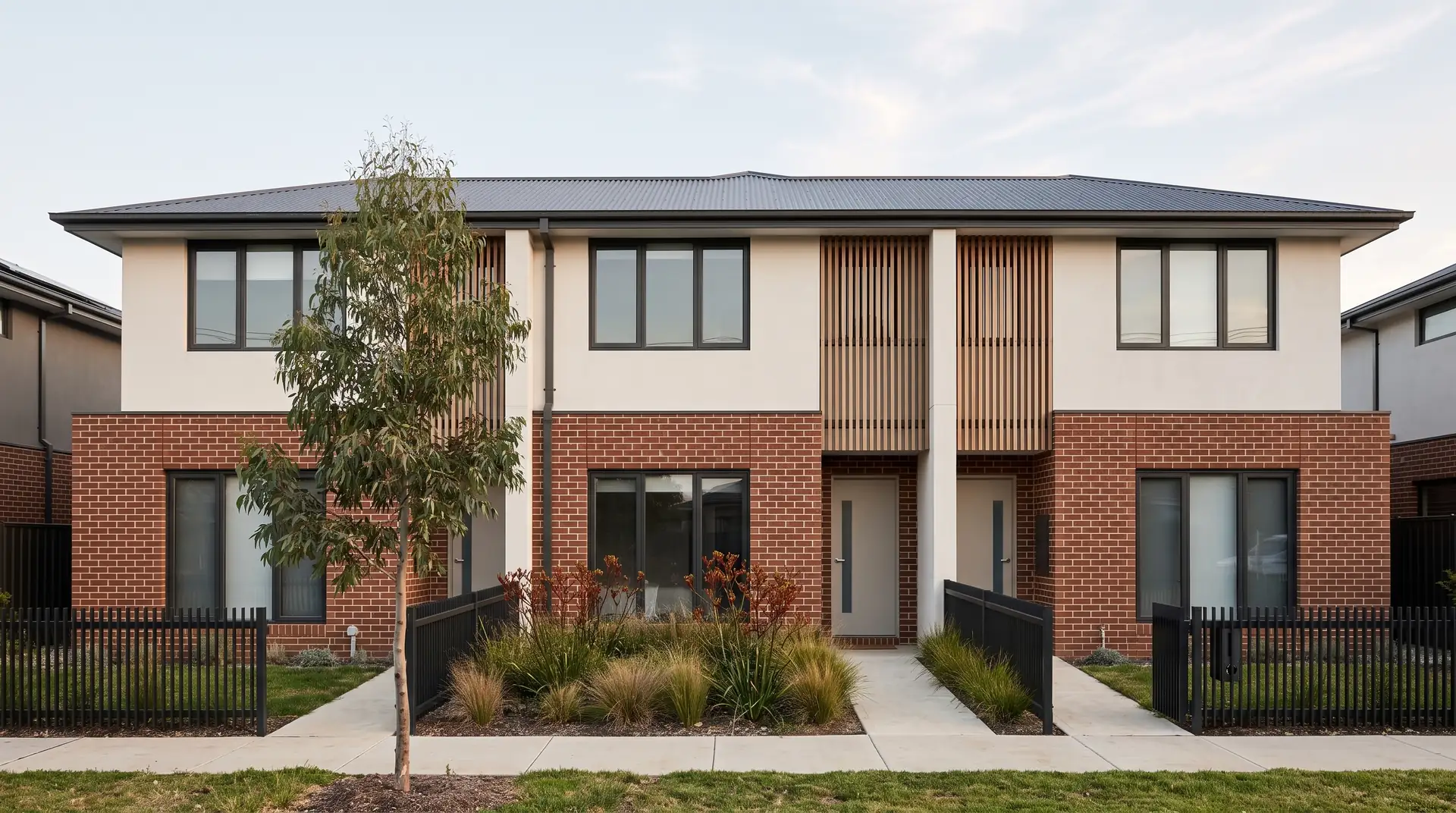
There is a middle ground. Some townhouses, villa units and ground floor lots sit in an owners corporation but have their own roof, subfloor, garden and fences. For these, the strata report can be widened so those parts are inspected the way a house would be, and a timber pest look can be added where it makes sense. Tell us about the property and we will confirm the scope before anything is booked.
If you already own a home on its own title and want a general check, a general condition and timber pest check is the owner's version of the same look.
What does a strata report look at in the apartment itself?
Inside the lot, we inspect the visible condition of the rooms, walls, ceilings and floors, with attention to signs of water entry, cracking or movement. Wet areas get particular attention, because showers, baths, vanities and laundries are where water damage tends to show first. Windows, doors, their frames and seals are checked, and so is any balcony, terrace or courtyard that belongs to the lot.
A car space or storage area that comes with the lot is inspected where it can be reached. As with any visual inspection, nothing is opened up, and areas that are concealed, obstructed or unsafe are listed as limitations.
In the common property, we look at what can be accessed on the day: entries, corridors, stairs, lifts and lobbies, the car park, gardens and the exterior as seen from the ground. Visible signs of water entry, cracking or movement that may relate to the wider building are recorded. Other lots, locked areas and places that need special permission, such as roof areas and plant rooms, are not inspected and are noted as limitations.
What can neither report tell you?
A strata report and a building inspection share the same edges. Neither is a valuation, and neither advises you on whether to buy. Neither can confirm that a building has no defects, because both describe what was visible at the time and cannot see inside walls, under floor coverings or into areas that were not accessible. Neither is a warranty, an insurance policy or a certificate of compliance.
A strata report also stops short of the legal and financial side. We help you read the owners corporation papers for building related points, such as a leak discussed over several meetings or works that have been voted on but not done. Levies, budgets, the finances of the owners corporation, the contract and your rights and obligations as an owner are matters for your conveyancer, lawyer or accountant.
Where an observation points to a wider building issue, either report can recommend a specialist, such as a structural engineer. Common property matters are then handled through the owners corporation.
How do you arrange the right one before your key dates?
Tell us the address, whether the property is an apartment, unit, townhouse or house, and whether it sits in an owners corporation. If you are not sure about the title, the selling agent or your conveyancer can tell you, or send what you have and we will work it out with you. Share any owners corporation papers you hold, such as the owners corporation certificate, recent minutes, the rules and any maintenance plan.
We confirm the scope, including which common areas can be reached, and provide a quote before anything is booked. Timing matters when you are buying, so tell us your auction, cooling off or settlement dates early and we will work around them where we can.
Not sure which inspection you need? Ask us. Call or message us on 0406 194 163, or send an enquiry and we will come back to you.
Sources and authorities
These public sources set out the requirements this guide refers to. They are the places to confirm what applies to your property; we help you understand and prepare for them.
- Consumer Affairs Victoria: what an owners corporation is and what buying into one involves.
- Consumer Affairs Victoria: inspecting a property before you buy, including professional building and pest inspections.