Specialist inspections
What do cracks in your walls mean and when should you worry?
In short
Many cracks are cosmetic, caused by materials moving a little with temperature and moisture. Cracks that are new, growing, wide, stepped through brickwork, or paired with sticking doors and uneven floors deserve a closer look. A structural inspection explains what is visible and says plainly when a structural engineer should assess it.
- Published
- Reviewed by
- VicWide
- Reading time
- 7 min read
Almost every house has a crack somewhere. Most are harmless. A few are the first sign of movement that needs attention, and telling the two apart from the lounge room is hard. This guide explains why walls crack, which patterns are usually cosmetic, which deserve a closer look, and what to do in the meantime.
It is general information about houses, not an assessment of your home. A structural inspection is the way to get that, and it says plainly when a structural engineer should be involved.
Why do walls crack?
Houses move a little all the time. Materials expand and contract with temperature and moisture: timber frames dry out and shrink, plasterboard joints flex, and brick and render respond to heat. Over a few seasons this shows as fine cracks at the joints between materials, often where a wall meets a ceiling or two sheets of plaster join.
The ground matters more. Soils across parts of Melbourne are reactive clay that swells when wet and shrinks as it dries. As the moisture in the soil changes, the footings sitting on it move, and the walls above follow.
Anything that changes the moisture under and around a house can set this off: a leaking pipe or drain, a downpipe emptying beside the wall, overflowing gutters, a wet garden bed against the house, a large tree drawing moisture from the soil, or a long dry spell followed by heavy rain. Our guide on why mould keeps appearing in a home looks at moisture from the other direction. The same water is often behind both problems.
Other causes include a new home or extension settling as its materials dry, alterations such as a removed wall or a new opening, old timber stumps or footings deteriorating, vibration or excavation nearby, and corrosion of steel lintels over openings in brickwork.
Which cracks are usually cosmetic?
Hairline cracks in paint or plaster along the lines where plasterboard sheets meet, or where a wall meets the ceiling, are common. So are fine cracks at cornices and skirting boards that open in summer and close in winter, crazing in render or paint, and short cracks from the corner of a window or door opening in a home that is settling after handover.
Cracks that have been there, unchanged, for years are also less of a worry than a crack that appeared last month.
Two cautions. Cosmetic is a judgement about cause, not appearance, and a fine crack can still be the first sign of something larger if it is new or growing. And a crack is never read on its own: the same hairline means different things in a solid brick wall and a plasterboard lining.
Which cracks deserve a closer look?
The signs that call for a closer look are mostly about change, width, direction and company:
- A crack that is new, or that has grown since you first noticed it.
- A crack clearly wider than a hairline, or wider at one end than the other, which can mean one part of the wall is dropping.
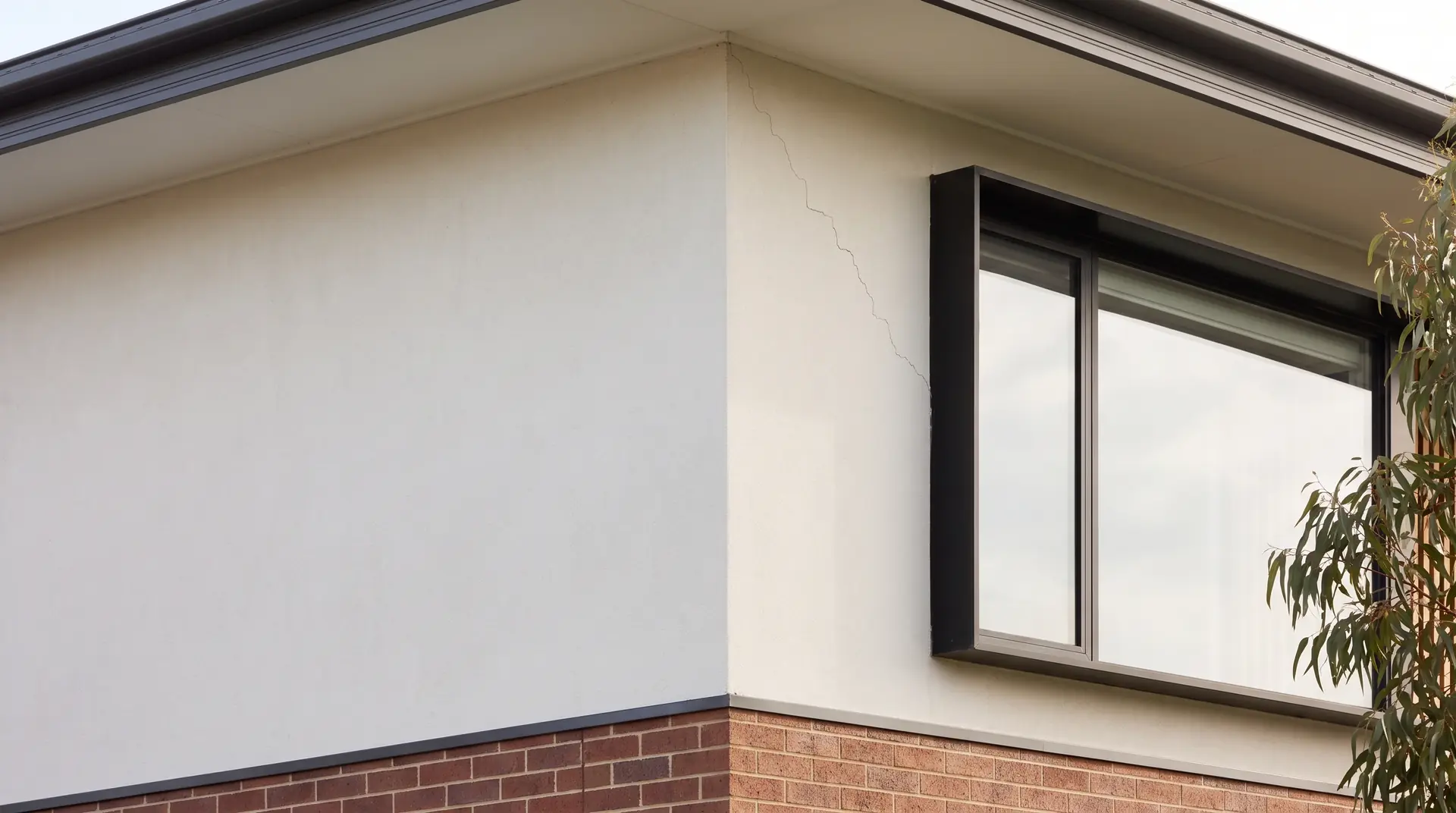
- Stepped cracks that follow the mortar joints through brickwork, and diagonal cracks running from the corners of doors and windows.
- Horizontal cracks in brickwork, or a crack you can see daylight through.
- Cracks that have company: doors and windows that stick or no longer latch, gaps opening at cornices or skirtings, floors that feel out of level or bouncy, or paving and steps pulling away from the house.
- Cracks that appeared after a leak, a burst pipe, nearby excavation, or a large tree being removed or planted.
- Cracks in a retaining wall that holds up part of the house or a neighbour's land.
Any one of these is a reason to have the home looked at. If part of a wall or ceiling looks as though it could fall, keep people away from the area and call emergency services if anyone is in danger.
What should you do when you find a crack?
The most useful thing you can do is record it and look for water:
- Photograph the crack with the date, and put a coin in the frame for scale.
- Mark the ends lightly in pencil, write the date beside the mark, and check again after a few weeks.
- Leave it unfilled until it has been looked at.
- Walk around the outside and look at gutters, downpipes, taps, drains, garden watering against the walls and dampness under the floor.
- Check the rest of the house, not just the crack: doors, windows, floors, external walls and paving.
- Gather the history: plans, previous reports, any building work, and roughly when any extension was built.
If you are buying rather than owning, raise the crack with the agent and arrange a building and pest check before buying with the crack as a stated concern. If damp is also showing, our guide on getting a mould inspection before buying explains how the two fit together.
What does a structural inspection look at?
A structural inspection is a closer, independent and visual look at the cracking and at the home around it. We look at visible cracking inside and out, in walls, ceilings, brickwork, render and paved areas, and at the signs of movement that go with it: doors and windows that stick, gaps at cornices and skirting boards, floors that appear out of level, and sagging in roof lines, ceilings, floors and verandahs.
We inspect the roof space and the subfloor where there is safe and reasonable access, and the conditions around the home that contribute to movement: drainage, downpipes, leaking taps, garden beds against walls and large trees close by. Retaining walls and outbuildings close to the home are included as agreed in the scope.
You receive a written report describing what was observed and where, with photos which double as a dated record, a clear list of areas that could not be inspected, and clear next steps, including whether we recommend that a structural engineer assess the concern. We talk you through it in plain language.
The inspection is visual and non invasive. Walls, floors and linings are not opened up and footings are not exposed. It is not a statutory inspection for a building permit, not a structural engineering assessment and not a certificate.
If you already own the home and want the whole house looked at with the crack in context, a general condition and timber pest check covers that ground. The steps in our guide to preparing a property for an inspection apply here too.
When do you need a structural engineer?
A visual inspection can describe what is visible and help you understand it. It cannot calculate loads, investigate below ground or design repairs. A structural engineer does those things: assesses structural adequacy, investigates causes such as soil conditions and footing depth, designs a repair where one is needed, and provides engineering certification where it is needed.
Where the signs suggest a structural problem, or the cause cannot be seen, our report says so plainly and recommends an engineer. The report and its photos give the engineer a clear record of what was observed. If you have been asked for a certificate, tell us when you enquire and we will let you know whether we can help, or who can issue it.
Two other situations change who you talk to. If the cracking relates to building work under way or recently finished, raise it with your builder as well, and speak with a lawyer if it becomes a dispute. If a neighbour is about to build, a pre-construction condition report records your home's condition before the works begin. For an insurance claim, speak with your insurer.
Tell us what you have noticed, where it is, when you first saw it and whether it has changed, with photos if you have them. We will confirm the scope and provide a quote. Call or WhatsApp 0406 194 163, or send an enquiry and we will come back to you.
Sources and authorities
These public sources set out the context this guide refers to. They are the places to confirm what applies to you; we help you understand and prepare for it.
- Building and Plumbing Commission: Victoria's building regulator, with consumer guidance on building work, building permits and building disputes.
- Consumer Affairs Victoria: consumer guidance on buying, building and renovating a home in Victoria.